



Earth’s pressure valve with creative side effects
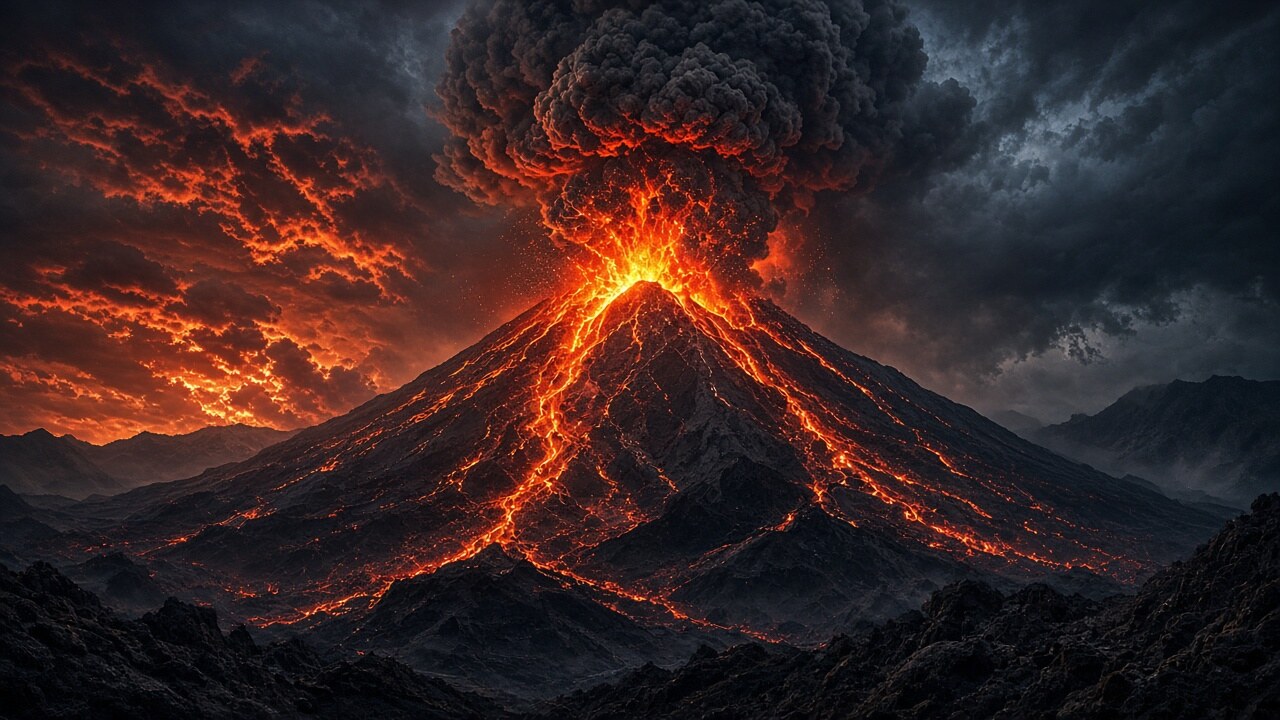
Volcanoes look like pure destruction on news footage: lava devouring roads, ash darkening noon, communities evacuating with what they can carry. That danger is real. Yet over geologic time, volcanoes are also builders. They stack islands from the seafloor, raise mountains, refresh minerals in soils, and pump gases that have helped shape climate across Earth’s history.
A volcano is where molten rock finds a path to the surface. Magma beneath the crust contains dissolved gases. As pressure drops on the way up, gases expand — sometimes gently, sometimes explosively. The style of eruption depends on magma chemistry, gas content, and how easily that magma can flow.
Understanding volcanoes means holding two truths together: they can end a harvest in a week, and they can create the ground for a thousand future harvests.
Not all eruptions are the same movie
Low-viscosity basaltic lava often flows like a glowing river, building broad shield volcanoes such as those in Hawaii. Higher-silica magmas are stickier. Gases cannot escape easily, pressure builds, and explosions can shatter rock into ash plumes that travel the jet stream.
Pyroclastic flows — avalanches of hot gas and rock fragments — are among the most lethal volcanic hazards because they move fast and stay lethally hot. Ashfall seems softer by comparison, yet it collapses roofs, stalls engines, contaminates water, and abrades lungs.
Monitoring networks listen for earthquakes, ground swelling, gas changes, and heat. Forecasts are probabilistic, not prophecy. The goal is time to move people, not a perfect script of the mountain’s next hour.
Look closer and the ordinary details keep unfolding into mechanisms, histories, and consequences worth another careful minute of attention.
How new land and new soil begin
Lava cools into rock that begins a long career as landscape. Rain, plants, and microbes attack that rock. Weathering releases nutrients. Over years to centuries, barren flows become colonized by hardy pioneers — lichens, ferns, grasses — then shrubs and forests where climate allows.
Volcanic ash can be a fertilizer and a smothering blanket in the same season. Fresh tephra may enrich fields with minerals; too much ash can bury crops and poison water with acidity or fluoride. Farmers living with volcanoes often know this duality in their bones.
Some of the world’s most productive agricultural regions sit on volcanic soils. That productivity is not free. It is purchased with proximity to hazard.
Climate can feel an eruption halfway around the world
Large explosive eruptions can inject sulfur dioxide into the stratosphere, where it forms aerosols that reflect sunlight. Global average temperatures can dip for a year or two. Sunsets turn lurid. Growing seasons shift. History records famines and odd weather after major events.
These climate pulses differ from greenhouse warming. They are temporary veils, not a long-term rise in heat-trapping gases. Still, they demonstrate how sensitive the atmosphere is to particles at the right altitude.
Volcanoes also release carbon dioxide over geologic time as part of Earth’s deep carbon cycle. Human emissions currently dwarf typical yearly volcanic CO₂, which matters when myths try to blame eruptions for modern warming trends.
Life’s stubborn return
After devastation, ecological succession writes a new chapter. Seeds arrive on wind and bird feet. Insects follow plants. Birds follow insects. Lakes form in craters and fill with their own food webs. In the ocean, volcanic islands become evolutionary laboratories — Darwin’s insight began with that kind of isolation.
Microbes can thrive in extreme volcanic environments, offering clues about early Earth and about life’s possible range on other worlds. Hot springs and fumaroles are harsh and oddly hospitable at once.
Communities rebuild too, often with better zoning, stronger roofs, and clearer evacuation routes. Culture adapts alongside ecology: festivals, warning songs, and respect for the mountain as neighbor rather than scenery.
Living wisely with restless ground
Millions of people live near active volcanoes because the land is fertile, the views are home, and history roots families there. Risk reduction means early warning, land-use planning, education, and infrastructure that can handle ash and lahars — volcanic mudflows that race down river valleys.
Tourism brings income and also new exposure. Hiking a crater rim is magnificent when the mountain is quiet and tragic when warning signs are ignored. Local observatories deserve the funding we give to more glamorous science, because their work is measured in lives.
Personal preparedness in volcanic regions includes masks for ash, clean water stores, and knowing lahar evacuation routes — unglamorous tools that outperform bravado.
The takeaway: creation wears a dangerous face
Volcanoes remake landscapes by force: lava, ash, blast, and time. They remake life by opening space for succession, enriching soils, building islands, and occasionally dimming the global sky. Respect is the correct scientific attitude — curiosity without denial.
For Daily-Feeds readers, volcanoes are a reminder that Earth is not a finished sculpture. It is still editing itself, sometimes with fire, and life keeps answering the edit with green shoots on cooling stone.







Comments
0 comments